Open Source Voice Agents Get Real-Time Speech in Hermes v0.20.0
Hermes Agent v0.20.0 “The Herald Release” shipped August 3, 2026 with real-time streaming voice capabilities. Open source voice agents can now speak and listen in live conversation, with clause-by-clause TTS output, barge-in support that lets you interrupt mid-sentence, and on-device wake word detection that never sends audio off your machine while waiting. The TTS and STT layers are fully pluggable. Edge TTS, local Whisper, or OpenAI models drop in without touching the agent logic.
This is the release the open-source agent space has been waiting for. The big labs have been shipping native speech-to-speech models (Grok Voice, GPT-Realtime, Qwen Audio) that bundle STT, LLM, and TTS into one pipeline. Those models sound great but lock you into the vendor’s STT and TTS, and you have no control over the voice layer. Hermes takes the opposite approach. The STT and TTS are replaceable providers, the LLM is whatever model you point it at, and the voice pipeline runs on your own hardware.
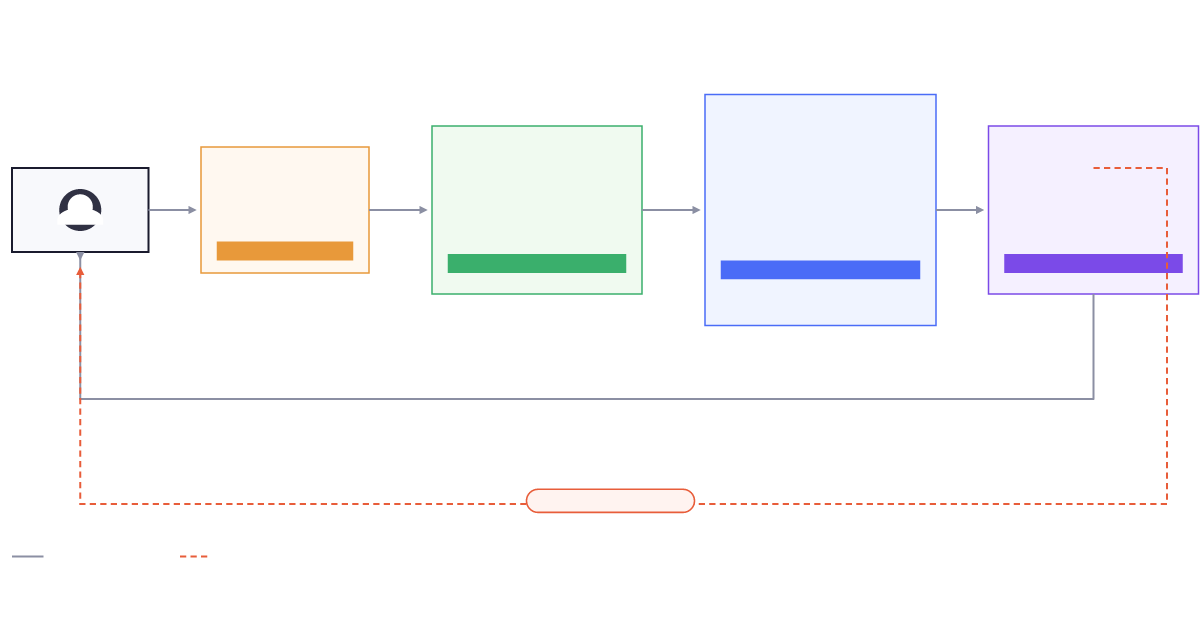
What did Hermes Agent v0.20.0 actually ship for voice?
The voice system in v0.20.0 is built around three capabilities that together make real-time conversation possible without a native speech-to-speech model.
Streaming TTS with clause-by-clause output. Instead of generating the full response, then TTS:ing it, Hermes streams TTS audio clause by clause as the LLM produces each sentence. Time-to-first-audio drops from “wait for the whole thing” to “start hearing it in under a second.” The release notes show a demo where the agent interrupts its own explanation of barge-in to demonstrate barge-in. That’s the kind of thing that only works when the TTS pipeline can start, stop, and restart mid-stream.
Barge-in. Listeners can interrupt the agent mid-sentence. The agent stops speaking, re-evaluates what it heard over the interruption, and responds. This is the hardest part of conversational voice to get right in a cascaded pipeline, because the ASR has to hear speech over the TTS output (or the TTS has to stop fast enough for the ASR to take over). Hermes handles it at the pipeline level rather than baking it into a single model.
On-device wake words. The agent listens for a wake word locally using a lightweight trigger model, and only starts the full STT pipeline when it hears one. No audio leaves your machine until the wake word fires. That matters for privacy-sensitive deployments, and it means the agent can sit idle in the background without burning API credits on silence detection.
How does pluggable TTS and STT work in Hermes Agent?
The voice providers slot into the agent config as modules. You pick an STT provider and a TTS provider independently, and the agent wires them into the conversation loop.
| Layer | Provider options | Notes |
|---|---|---|
| STT | Local Whisper (default), Whisper API, Edge STT (free), OpenAI STT | Run entirely offline with local Whisper |
| TTS | Edge TTS (free, default), OpenAI TTS, Google Cloud TTS | Edge TTS works offline, good for prototyping |
| Wake word | Porcupine (on-device), custom hotword models | Runs on-device, never sends audio before activation |
| LLM | Compatible with OpenAI API format, local models via Ollama/vLLM | The voice layer is independent of the model |
This table understates the practical difference. A cascaded system where every voice layer has a pip install and a config line is a system you can actually inspect, change, and debug. If Edge TTS produces audio that sounds hollow on your use case, you swap it for OpenAI TTS with one config change. If you need the audio to never leave a VPC, you run local Whisper with a local LLM and Edge TTS on the same machine.
The trade-off is quality. Edge TTS lives up to its price tag. It is fine for demos, internal tools, and early prototypes, but the gap to a dedicated TTS model like Simba 3.2 (1,234 Elo, Speech Arena) or a packaged voice agent pipeline (SpeechifyAI from $0.068/min all-in) is audible. The Hermes team has been clear about this: the provider model means you bring your own TTS quality, and the framework does not add latency beyond what the providers incur.
How does Hermes Agent compare to native speech-to-speech?
This is the architectural question the release surfaces. There are now two real approaches to building voice agents.
Native speech-to-speech (Grok Voice, GPT-Realtime, Qwen Audio) runs ASR, reasoning, and TTS in a single model. I wrote about Grok Voice 2.0 specifically last week. Lower architectural complexity, better conversational dynamics, lower time-to-first-audio. The trade-off is vendor lock-in at every layer: you use that vendor’s STT, that vendor’s TTS, and you cannot swap either.
Cascaded voice agents (Hermes Agent, SpeechifyAI, Deepgram Voice Agent) chain separate STT, LLM, and TTS models. Higher architectural complexity, but every layer is independently replaceable. You pick the best ASR for your audio conditions, the best LLM for your task, the best TTS for your voice quality requirements.
Each approach wins on different axes.
| Native S2S (Grok, GPT-Realtime) | Cascaded pipeline (Hermes Agent) | |
|---|---|---|
| Time-to-first-audio | 0.70s (Grok 2.0) | ~1-2s depending on providers |
| Voice quality | Fixed to vendor model | Any TTS provider you choose |
| Barge-in | Built into model | Pipeline-level handling |
| Provider lock-in | Full stack from one vendor | Each layer independently replaceable |
| Self-hostable | No | Yes, fully open source |
| Cost model | Per-minute audio | Per-model token + per-minute TTS |
| Privacy model | Audio goes to vendor | Full local inference possible |
The Hermes release makes the cascaded path more viable for teams that need control over the voice layer. If you are building a branded voice assistant and the voice quality defines the product, you want the TTS to be a choice, not a dependency.
What does the A2A v1.0 protocol add to voice agents?
The release ships A2A v1.0 (Agent-to-Agent protocol), which lets Hermes agents discover and communicate with other agents. In a voice context, this means a voice agent can hand off to a specialist agent mid-conversation: take a food order by voice, hand the structured order to a fulfillment agent, and come back with a confirmation the caller hears in the same voice.
The protocol is the kind of infrastructure that looks academic until you have built the thing it replaces. Before A2A, agent-to-agent communication in open-source frameworks meant custom message formats, hardcoded routing, and shared-state coupling. A2A standardises discovery, authentication, and message delivery between agents that were built independently. In voice, that standardisation matters because voice agents introduce real-time constraints that web-request-based handoffs cannot meet.
What does this mean for developers building open source voice agents?
Three things.
First, the open-source voice agent stack just crossed a threshold. Hermes v0.20.0 is not the first agent framework to support TTS, but it is the first to package streaming, barge-in, wake words, and provider abstraction into a single release with an MIT license and 225K stars worth of community validation. The release has production-grade documentation, a working CLI, gateway adapters, and desktop integrations. It is not a research demo.
Second, the pluggable voice layer shifts the question from “which framework supports voice” to “which TTS provider do I plug into my voice agent.” The framework decision is increasingly settled. The voice quality decision is open. This is good for the ecosystem and good for TTS providers with actual quality differentiation.
Third, the gap between open-source voice agents and native speech-to-speech is real and narrowing. Native S2S wins on latency and conversational flow. Cascaded open-source agents win on control, privacy, and voice quality. The right choice depends on whether your product competes on conversational feel or on voice identity.
That tension is the story of voice AI right now. The commercial labs keep pushing latency and quality forward with monolithic models. The open-source community keeps making the component approach more practical. Both paths produce real products this year. Pick the one where your constraint lives.
FAQ
What is Hermes Agent v0.20.0?
Hermes Agent v0.20.0 “The Herald Release” is the August 3, 2026 release of Nous Research’s open-source agent framework. It adds real-time streaming TTS with clause-by-clause output, barge-in for interrupting the agent mid-speech, on-device wake word detection, and pluggable STT/TTS providers. The A2A v1.0 agent-to-agent protocol also ships in this release. MIT licensed, 225K GitHub stars.
Can I run Hermes Agent entirely offline?
Yes. With local Whisper for STT, Edge TTS for speech output, and a local LLM via Ollama or vLLM, the entire voice pipeline runs on-device. No audio or data leaves your machine unless you configure a cloud provider. The wake word detection runs locally regardless of provider choice.
How does Hermes Agent compare to Grok Voice 2.0 or GPT-Realtime?
Hermes Agent is a cascaded pipeline with replaceable STT, LLM, and TTS components. Grok Voice 2.0 is a native speech-to-speech model that bundles all three into one. Hermes gives you control over voice quality and provider choice. Grok gives you lower latency (0.70s first audio) and simpler architecture. They solve the same problem at different points on the control-versus-convenience axis.
Does Hermes v0.20.0 support voice cloning?
Not directly. The voice quality depends on your chosen TTS provider. If you use Edge TTS or OpenAI TTS, you get the standard voices from those providers. To use cloned or custom voices, you need a TTS provider that supports voice cloning, like Speechify’s Simba API or ElevenLabs, plugged into the TTS slot.
Is Hermes Agent production-ready for voice?
For internal prototypes and developer tooling, yes. For customer-facing voice agents with strict voice quality or latency requirements, the pluggable provider model means you should evaluate your specific TTS provider’s latency and quality in your pipeline before committing. The framework itself is MIT-licensed, well-documented, and backed by a large community (~225K stars). The quality question shifts to your chosen providers.